For years, every time I heard the word migration, I felt a chill down my spine. In our industry, it’s usually a synonym for chaos: months of risk, breaking things that actually work, and dealing with nervous clients.
Recently, I stood before a battle-tested Symfony monolith. It’s the heart of a business, solid and reliable, but its frontend felt like a relic from 2010. The “purist” advice was everywhere: “Trash it. Rewrite the whole thing as a modern API.” I refused to accept that. I was obsessed with a different idea: What if the backend didn’t even realize the frontend had traveled to the future?
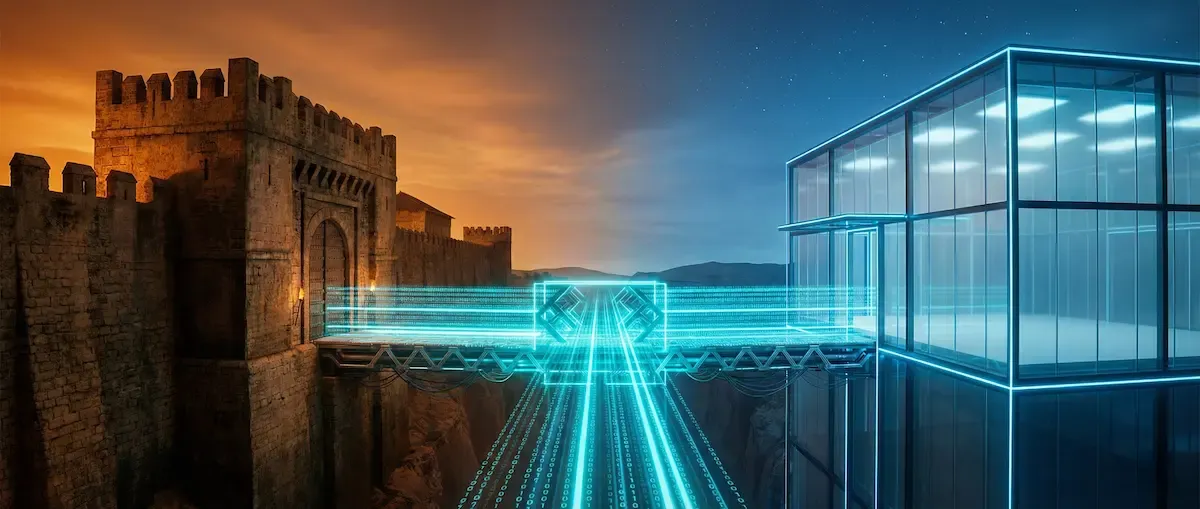
We’ve all been tempted by this. You think starting from scratch is easier than dealing with legacy code, but when that legacy code is what’s currently billing, playing with it is playing with fire. Too many projects die in the “rewrite phase” because they over-engineered a massive API from day one. I didn’t want to build a monument; I wanted to build a bridge. What I call a Silent Connector.
This approach comes from a place of respect for what’s already working. My goal wasn’t to change the engine, but to build a better dashboard without having to stop the system. Instead of refactoring old controllers to return JSON, I created dedicated API endpoints that act as thin “wrappers” for existing services.
This is the real Bridge Pattern:
- The business logic stays where it is.
- Symfony handles the heavy lifting.
- The API just translates the result for Vue.js.
Of course, I also thought about security. Following the hard lessons from my WordPress plugin rejection, I knew I couldn’t cut corners. I implemented JWT for authentication, ensuring that even though the frontend is now decoupled, every single request is treated as a potential threat. If the input doesn’t match the schema, the bridge closes. No exceptions.
But there was another challenge: performance perception. Because of the legacy systems can be heavy, and I couldn’t afford to let the new Vue.js frontend feel “laggy”, I designed the bridge to provide immediate Acknowledge (ACK) signals. The frontend knows the request was received instantly, and this “heartbeat” is what makes the whole system feel modern and responsive, even if the backend is still doing things the “old way” behind the scenes.
There is a specific kind of professional satisfaction when you deploy a new, modern interface and the legacy core doesn’t even flinch. No downtime, no frantic debugging at 3 AM. Building this bridge allowed the client to have the agility of a modern system while keeping the stability of their original investment.
Sometimes, the best engineering isn’t about using the newest stack. It’s about having the empathy to understand that the business cannot stop, and the craftsmanship to build a transition that makes sense. If your system is stuck in the past, don’t tear it down. Build a bridge, and let it carry you into the future without the drama.